What is IMDELLTRA® (tarlatamab-dlle)?
IMDELLTRA® is a prescription medicine used to treat adults with extensive stage small cell lung cancer (ES-SCLC), which is cancer that has spread throughout
the
lung or to other parts of the body, and who have received treatment with chemotherapy that contains platinum, and it did not work or…READ MORE
IMDELLTRA® is a prescription medicine used to treat adults with extensive-stage small cell lung cancer (ES-SCLC), which is cancer …READ MORE
IMDELLTRA® is a prescription medicine used to treat adults with extensive stage small cell lung cancer (ES-SCLC), which is cancer that has spread throughout
the lung or to other parts of the body, and who have received treatment with chemotherapy that contains platinum, and it did not work or is no longer working.
It is not known if IMDELLTRA® is safe and effective in children. READ LESS

You are now leaving IMDELLTRA.com and entering another Amgen website. Amgen is not adopting such content into this website.
You are now leaving IMDELLTRA.com and entering an external website. Amgen is not responsible for the content of the third-party website and is not adopting such content into this website.
An ES-SCLC diagnosis opens up countless questions. We’ve brought some of the most common ones here to help you. Don’t forget that your health care team is an important resource to answering questions about how this affects you.
IMDELLTRA® is a T-cell (a type of immune cell in the body) engager and is designed to use your body’s immune system to help fight SCLC cells. IMDELLTRA® helps the immune system recognize specific molecules on their surface, helping to target and destroy cancer cells.1,2
IMDELLTRA® is immunotherapy because it helps a person’s immune system destroy the cancer cells. This is different from chemotherapy, which uses drugs to stop the growth of cancer cells by killing the cells or by stopping them from dividing.1-3
SCLC is an aggressive type of cancer that starts in the lungs and spreads quickly. There are 2 stages, limited stage and extensive stage, and that’s split based on how much the cancer has grown or spread. IMDELLTRA® is approved by the FDA for adults with extensive stage SCLC.1,3,4
A study compared how long people with extensive stage small cell lung cancer (ES-SCLC) lived with IMDELLTRA® compared with chemotherapy. 509 people whose cancer worsened after receiving treatment with chemotherapy containing platinum were included. About half (254 people) were randomly assigned to receive IMDELLTRA®, and the other half (255 people) were assigned to receive chemotherapy.1
Half of the people receiving IMDELLTRA® were alive for more than 1 year (13.6 months) after starting treatment. Half of the people receiving chemotherapy were alive for 8.3 months after starting treatment.1
Yes, IMDELLTRA® has been approved by the FDA as of November 2025, for adults with extensive stage small cell lung cancer (ES-SCLC).5
IMDELLTRA® can cause serious side effects that can be severe, life-threatening, or cause death, including cytokine release syndrome (CRS) and neurologic problems. Other serious side effects include low blood cell counts, infections, liver problems, and allergic reactions. The most common side effects include tiredness, decreased appetite, a bad or metallic taste in your mouth, fever, muscle or bone pain, constipation, and nausea.6 Please go to our Side Effects page for the full list.
CRS is a condition that happens when your immune system reacts harshly to an immunotherapy.7 It is common during treatment with IMDELLTRA® and can also be severe, life-threatening, or cause death.6 In clinical studies, 73% of CRS events in people who were given IMDELLTRA® occurred after the first dose, and 60% occurred after the second dose. 15% of CRS events happened after the third or later dose.1 Your health care provider will monitor you for signs and symptoms of CRS during treatment with IMDELLTRA® and treat you as needed. You may be hospitalized if you develop signs or symptoms of CRS during treatment with IMDELLTRA®. Your health care provider may temporarily stop or completely stop your treatment with IMDELLTRA® if you develop CRS.6
IMDELLTRA® can cause neurologic problems that can be severe, life-threatening, or cause death. Neurologic problems may happen days or weeks after you receive IMDELLTRA®. Your health care provider may refer you to another health care provider who specializes in neurologic problems. Your health care provider will monitor you for signs and symptoms of neurologic problems during treatment with IMDELLTRA® and treat you as needed. You may be hospitalized if you develop signs or symptoms of neurologic problems during treatment with IMDELLTRA®. Your health care provider may temporarily stop or completely stop your treatment with IMDELLTRA® if you develop neurologic problems.6 Review our Side Effects page for possible signs or symptoms.
Side effects can happen at different times for each person. In clinical trials, CRS usually began about 16 hours after the most recent dose of IMDELLTRA®. Neurologic side effects tended to occur starting around 16 days after the first dose. Your health care team will monitor you in an appropriate health care setting to help manage side effects.1,6
IMDELLTRA® has a step-up dosing schedule that may include being monitored in an appropriate health care facility overnight for the first two doses.1,6 For the full monitoring requirements, visit our Dosing & Treatment Process page.
IMDELLTRA® is given by intravenous (IV) infusion over the course of about one hour at a health care facility. Due to the risk of CRS and neurological problems, your health care provider will monitor you to help manage any potential side effects.1,6
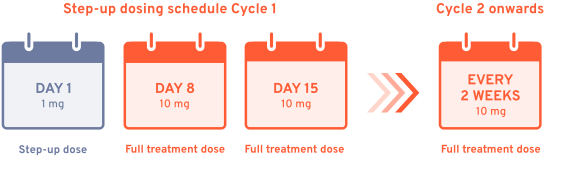
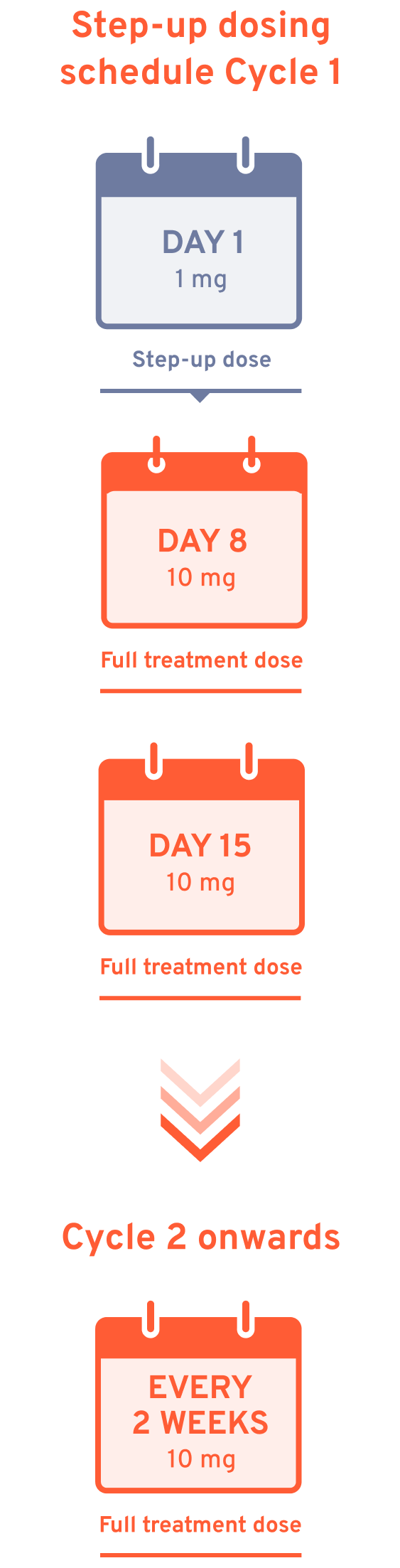
IMDELLTRA® uses a step-up dosing schedule, which means the first dose of IMDELLTRA® will be 1 mg on the first day, then goes to the full treatment dose of 10 mg on day 8, 10 mg on day 15, and 10 mg every two weeks after.1,6
Bring someone to your appointments and any questions you may have for your health care team. Consider bringing a journal with notes about how you’re feeling every day. Your health care provider will ask you about your medical conditions. Depending on where you are in the dosing cycle, and how you respond to treatment, you may be staying overnight in a healthcare facility, so talk to the facility staff about what you might need.6
An Amgen Patient Navigator is ready to answer your questions, like understanding your treatment journey, helping you understand your coverage, verify your benefits, and more. You can speak with an Amgen Patient Navigator directly at (844) 992-6436, Monday - Friday 8:00 AM - 8:00 PM ET, or visit AmgenSupportPlus.com to learn how Amgen can help.
The Amgen Patient Navigator is not part of a patient’s treatment team and does not provide medical advice or case management services. The Amgen Patient Navigator does not administer Amgen medications. Patients should always consult their health care provider regarding medical decisions or treatment concerns.
Amgen has a SupportPlus Co-Pay Program, which may help patients with private or commercial insurance lower their out-of-pocket costs. There is no income eligibility requirement, and it can be applied to deductible, co-insurance, and co-payment* so you could pay as little as $0* out-of-pocket for each dose.
Check your eligibility and sign up today at www.AmgenSupportPlus.com/copay
Amgen® SupportPlus can provide information about independent nonprofit foundations that may be able to help.† Call Amgen SupportPlus at (866) 264-2778, Monday - Friday 8:00 AM - 8:00 PM, or visit AmgenSupportPlus.com to learn more.
Talk to your health care team, and together, you'll decide if IMDELLTRA® is right for you.
Remember that there are local and national supportive resources and community organizations that may be helpful to you. They can offer information about SCLC and provide a place to share your experience or hear about other patients’ experiences. For a list of some third-party resources, visit our Support and Resources page.
Cytokine Release Syndrome (CRS). CRS is common during treatment with IMDELLTRA® and can be
severe, life-threatening, or cause death. Tell your healthcare provider or get medical help right away if you
develop any signs or symptoms of CRS, including:
Neurologic Problems. IMDELLTRA® can cause neurologic problems that can be severe, life-threatening, or cause death. Neurologic problems may happen days or weeks after you receive
IMDELLTRA®. Your healthcare provider may refer you to a healthcare provider who specializes in
neurologic problems. Tell your
healthcare provider right away if you develop any signs or symptoms
of neurologic problems, including:
Due to the risk of CRS and neurologic problems, you will receive the following monitoring during treatment with IMDELLTRA®:
Your healthcare provider will monitor you for signs and symptoms of CRS and neurologic problems during treatment with IMDELLTRA® and treat you as needed. You may be hospitalized if you develop signs or symptoms of CRS or neurologic problems during treatment with IMDELLTRA®. Your healthcare provider may temporarily stop or completely stop your treatment with IMDELLTRA® if you develop CRS or neurologic problems.
Tell your healthcare provider about all the medicines you take, including prescription and
over-the-
counter medicines, vitamins, and herbal supplements.
Do not drive, operate heavy or potentially dangerous machinery or do other dangerous activities, including work-related activities, during treatment with IMDELLTRA® if you develop dizziness, confusion, tremors, sleepiness, or any other symptoms that impair consciousness until your signs and symptoms go away. These may be signs and symptoms of neurologic problems.
Low blood cell counts (cytopenia). Decreased blood cell counts can be severe and may include the following:
Your healthcare provider will do bloodwork before you start and during treatment with IMDELLTRA®. Your healthcare provider will monitor you for signs or symptoms of these serious side effects during treatment and may temporarily or completely stop treatment with IMDELLTRA® if you develop certain serious side effects.
These are not all the possible side effects of IMDELLTRA®.
Call your healthcare provider for medical advice about side effects. You may report side effects to FDA at
1-800-FDA-1088.
IMDELLTRA® is a prescription medicine used to treat adults with extensive stage small cell
lung cancer
(ES-SCLC), which is
cancer that has spread throughout the lung or to other parts of the body, and who
have received treatment with
chemotherapy that contains platinum, and it did not work or is no longer working.
It is not known if IMDELLTRA® is safe and effective in children.
Please see IMDELLTRA® full Prescribing Information, including BOXED WARNINGS and Medication Guide.
References: 1. IMDELLTRA® (tarlatamab-dlle) prescribing information, Amgen. 2. Einsele H, et al. Cancer. 2020;126:3192–3201. 3. National Cancer Institute. NCI Dictionary of Cancer Terms. www.cancer.gov. Accessed March 2, 2026. 4. GO2 for Lung Cancer. www.go2.org. Accessed March 17, 2026. 5. Food and Drug Administration. https://www.fda.gov/. Accessed March 17, 2026. 6. IMDELLTRA® (tarlatamab-dlle) medication guide, Amgen. 7. Shimabukuro-Vornhagen A, et al. J Immunother Cancer. 2018;6:56.
Cytokine Release Syndrome (CRS). CRS is common during treatment with IMDELLTRA® and can be severe, life-